Menopause & the Skin Microbiome: What Changes?

What emerging research suggests about the skin microbiome across the menopausal transition — and what changing hormones may mean for the living ecosystem of our skin.

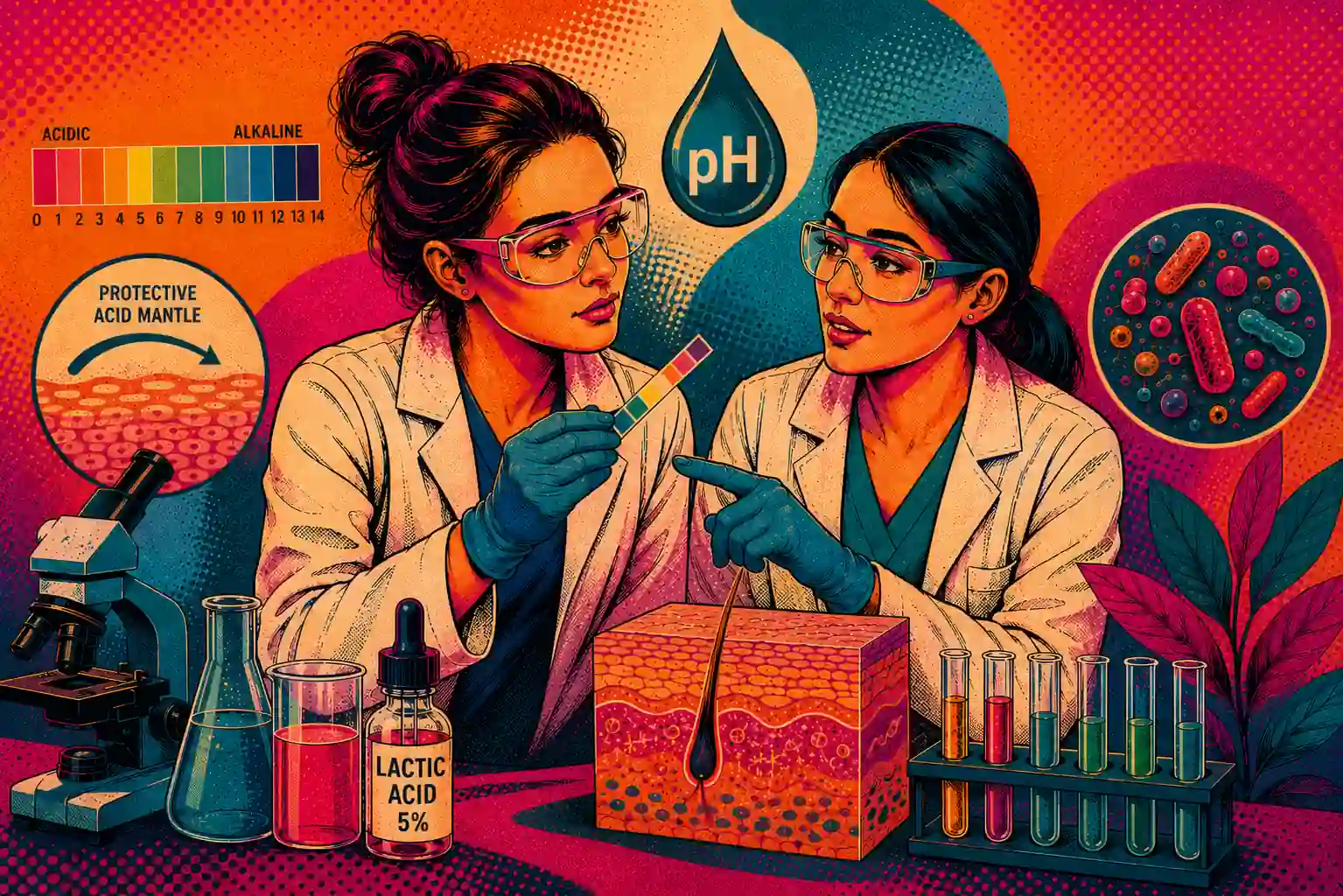
BeMediq pop art illustration of a female scientist examining the skin microbiome, surrounded by microbes, laboratory equipment and scientific symbols.

You look in the mirror and your skin seems different.

Perhaps it feels drier. Perhaps it reacts differently. Perhaps something that never bothered it suddenly does. Maybe there is itching, redness or a change in texture you cannot quite explain.

The usual explanation is simple:

You’re getting older.

But what if part of the story is more specific?

During perimenopause and into postmenopause, a woman’s hormonal environment changes profoundly. At the same time, some of the conditions that shape the living ecosystem of the skin — its sebum, moisture, lipids, pH, barrier biology and immune environment — may change too.

What happens to the living ecosystem of our skin when our hormonal environment begins to change?

Emerging research suggests that the answer may involve not only our own cells, but also the bacteria and fungi that have been living with us all along.

How the Skin Environment Changes Across the Menopausal Transition

The skin microbiome does not exist independently of us.

Bacteria, fungi, viruses and other microorganisms live within an ecosystem created partly by the skin itself. The skin’s lipids, moisture, chemistry, barrier and immune activity all help create the conditions in which microorganisms live.

Change those conditions, and microbial communities may respond.

This makes the menopausal transition particularly interesting.

Estrogen is involved in several processes that help determine how our skin functions. It can influence keratinocytes, the main cells of the epidermis; how much water the skin can retain; and how skin cells produce and process lipids — the fats that form an essential part of the skin barrier.

Together, these processes help the skin retain moisture, maintain its barrier and protect itself from the outside environment. We may experience the result as skin that feels smooth, supple and comfortable and appears well hydrated.

When these conditions change, we may notice it: skin can feel drier, tighter or rougher, or become more reactive to products and irritants.

One particularly interesting connection involves ceramides.

Ceramides are specialized lipids that make up a large proportion of the fats between the cells in the outermost layer of our skin, the stratum corneum. Their job becomes easier to understand with the classic “bricks and mortar” analogy.

Imagine the outermost skin as a brick wall. The flattened skin cells are the bricks. The carefully organized mixture of ceramides, cholesterol and fatty acids between them acts like the mortar that helps hold the structure together.

Ceramides are therefore not simply oils that make skin feel soft. They are part of the architecture that allows the barrier to function.

Research has found differences in the ceramide profile of postmenopausal skin — including lower ceramide levels and shorter average chain lengths. Interestingly, these differences were not evident in the same way in postmenopausal women taking hormone replacement therapy, and higher circulating estradiol was associated with both greater ceramide abundance and longer ceramides.[1]

The researchers then took the question one step further.

In the laboratory, they treated primary human keratinocytes — the main cells of the epidermis — with estradiol. The cells increased their production of particular ceramides, providing experimental evidence that estradiol can directly influence ceramide metabolism in skin cells.[1]

That makes declining estradiol more than a background feature of the menopausal transition. It may be one of the biological mechanisms contributing to changes in the lipid architecture of the skin barrier.

If the composition and organization of these barrier lipids change, the “mortar” between the cells may no longer function in quite the same way.

That can affect the skin’s ability to keep water in, keep potential irritants and other substances out, and maintain a stable chemical environment. For a woman, changes in this barrier environment may be experienced as greater dryness, tightness, roughness or reactivity.

But ceramides matter to our story for another reason.

The barrier is also part of the environment in which the microbiome lives.

Microorganisms do not encounter neutral territory. The lipids, moisture, chemistry and immune activity of the skin help determine which microorganisms can thrive and how they behave.

What we cannot yet do is extend the causal chain all the way from estradiol to the microbiome. We do not know that declining estradiol changes a particular ceramide, which then causes a particular bacterium or fungus to increase or decrease.

But the research gives us an important piece of the pathway:

Declining estradiol Altered ceramide metabolism in keratinocytes Changes in barrier lipids A potentially changing environment for the skin microbiome

Our skin lipids, in other words, are not only building materials for our barrier. They are also part of the ecological environment in which our microorganisms live.

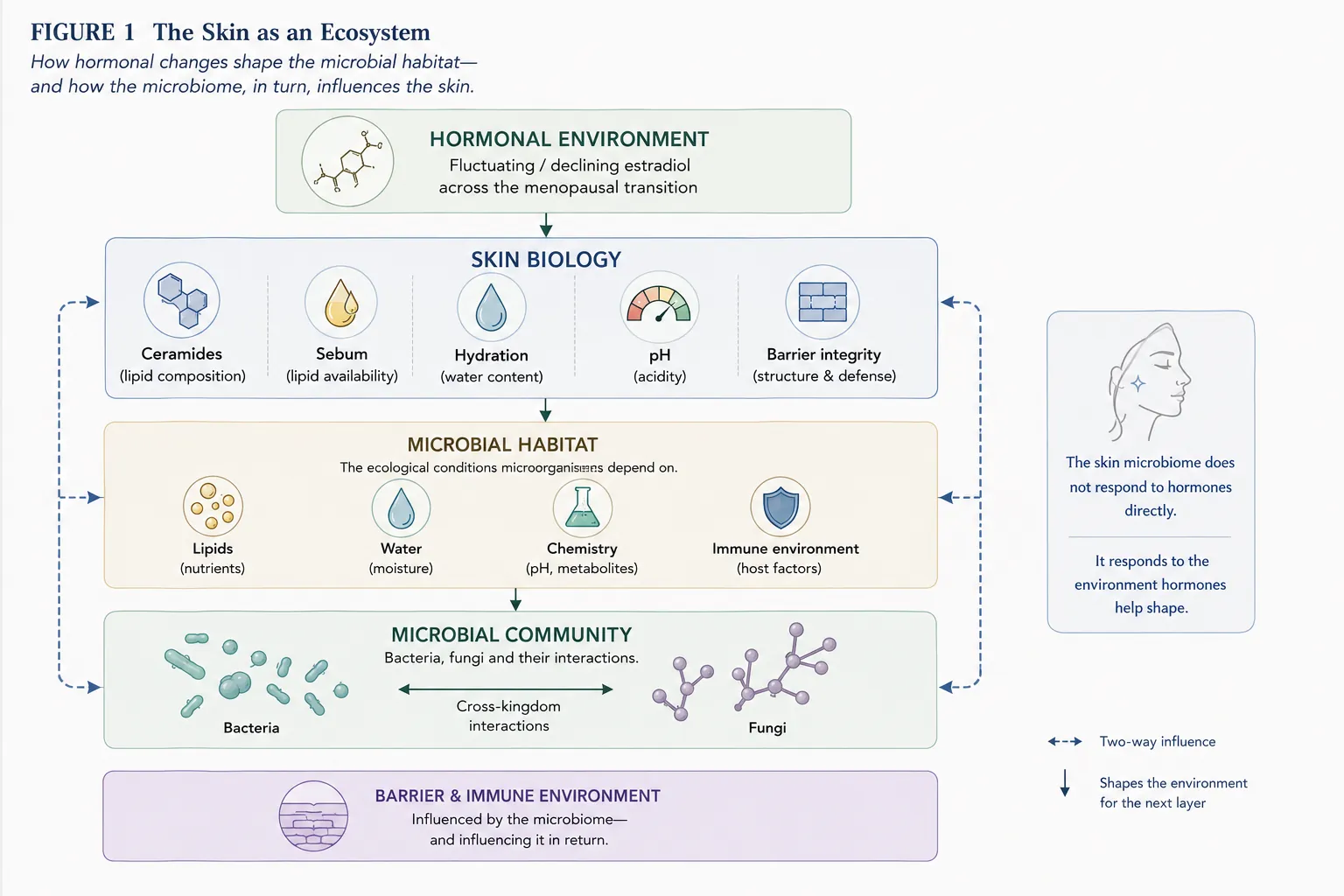
BeMediq diagram showing how hormonal changes across the menopausal transition may shape skin biology, the microbial habitat and interactions between the skin microbiome, barrier and immune environment.
Figure 1 The Skin as an Ecosystem Hormonal changes across the menopausal transition may influence the biological environment in which the skin microbiome lives — including lipids, hydration, pH and barrier function. The relationship is bidirectional: the skin environment helps shape microbial communities, while microorganisms can also interact with the skin barrier and immune environment.

Skin pH, Sebum and Hydration During the Menopausal Transition

If hormones can influence the biology of the skin barrier, the next question is whether we can actually measure changes in the environment that microorganisms live in.

A 2026 study offers one of the most detailed looks yet.

Researchers studied 345 Asian women across three hormonal stages: 171 premenopausal, 36 perimenopausal and 138 postmenopausal. Importantly, menopausal status was not determined by age alone. The researchers also considered reproductive characteristics and hormone measurements, including estradiol and FSH.[2]

The population matters. This study was conducted specifically in Asian women, and skin physiology and microbial communities can vary across populations and environments. Its findings therefore should not automatically be assumed to describe women of every ethnic background in exactly the same way.

There are, however, some intriguing points of convergence. A separate study in Caucasian women also found a lower relative abundance of Cutibacterium in postmenopausal compared with premenopausal facial skin.[3] Other microbial findings are less consistent across studies, particularly for Malassezia. For now, the evidence suggests that some microbiome patterns may extend across populations, while others still need to be tested much more broadly.

The 2026 researchers measured several features of the skin environment — including sebum, hydration, pH and transepidermal water loss (TEWL).

Each tells us something different about the conditions in which skin and its microorganisms coexist.

Sebum is the lipid-rich substance produced by our sebaceous glands. We usually notice it when skin feels oily, but biologically it does much more than create shine. Its lipids contribute to the skin environment and provide nutrients that certain microorganisms can use.

In the study, sebum levels were significantly lower in postmenopausal than in premenopausal women.[2]

That means a microorganism adapted to a lipid-rich environment may encounter different living conditions as sebum changes.

Hydration describes the water content of the outermost skin. Adequate water helps the stratum corneum remain flexible and supports processes involved in normal barrier function. When hydration falls, we may experience the difference as dryness, tightness, roughness or reduced suppleness.

Water also matters to microorganisms. Different species thrive under different moisture conditions, which is one reason the microbial communities of a moist armpit, an oily forehead and a dry forearm can look remarkably different.

Then there is pH.

Healthy skin generally maintains a mildly acidic environment, often called the acid mantle. This acidity supports enzymes involved in normal barrier function and creates chemical conditions that influence which microorganisms can thrive.

But the menopausal findings were not as simple as “hormones decline and pH rises.”

The study found no significant pH difference between premenopausal and postmenopausal women. Postmenopausal women did, however, have a higher skin pH than perimenopausal women.[2]

That is important because it cautions against imagining the menopausal transition as a straight biological line.

Perimenopause is a period of substantial hormonal fluctuation, and the skin may not simply move steadily from one state into another.

And pH raises another intriguing question.

If the chemical environment of our skin can change across the menopausal transition, can we influence it ourselves?

Research suggests that skincare formulations can influence skin pH. In one recent clinical study in postmenopausal women, some low-pH skincare formulations altered skin pH, while the observed effects on the microbial community were more limited.[12]

But whether lowering skin pH is beneficial in every context, how long these changes persist, and what they ultimately mean for the skin microbiome are much more complicated questions.

Finally, researchers can measure TEWL — transepidermal water loss.

Despite its name, TEWL is not simply a measure of how “dry” skin is. It measures how much water passes from inside the body through the epidermis and escapes into the surrounding air. Researchers therefore use it as one indicator of how effectively the barrier is controlling water loss.

Here too, the picture is complicated. Studies comparing reproductive and postmenopausal skin have not produced completely consistent TEWL results, even though changes in hydration and barrier lipids have been reported.[4]

That distinction matters.

A woman can experience dry or tight skin without every laboratory measure of barrier function moving in the same direction.

And for the microbiome, these measurements are not isolated numbers.

Sebum determines which lipids are available. Hydration changes water availability. pH changes the chemical environment. Barrier biology influences what passes in and out and how the skin interacts with its surroundings.

Together, they help create the environment in which bacteria and fungi live.

The more important possibility is that hormonal transition may reshape several conditions of the skin ecosystem at the same time.

And emerging research suggests that its microbial inhabitants may respond.

How the Skin Microbiome Differs Across Menopause

If sebum, hydration, pH and barrier biology help create the conditions in which microorganisms live, an obvious question follows:

Do the microbial communities themselves differ as a woman moves through the menopausal transition?

Early research suggests they may.

A 2024 pilot study comparing healthy premenopausal and postmenopausal Caucasian women found differences in the facial bacterial microbiome. One of the most notable was a lower relative abundance of Cutibacterium in postmenopausal women, alongside greater overall bacterial diversity.[3]

Cutibacterium After Menopause: Why Sebum Matters

Cutibacterium is a group of bacteria that naturally lives on human skin. One species, Cutibacterium acnes, is well known because of its association with acne — but that reputation tells only part of the story.

C. acnes may be famous for acne, but it is also a normal resident of healthy adult skin.

It is particularly common in areas rich in sebaceous glands. It is well adapted to this lipid-rich environment and can use components of sebum as nutrients.[10]

This makes the postmenopausal finding particularly interesting.

If the skin produces less sebum, as observed in the postmenopausal group in the 2026 study of Asian women, organisms adapted to a sebum-rich environment may find that their living conditions have changed.[2]

Interestingly, lower relative Cutibacterium abundance after menopause has been observed in more than one study population, including Caucasian women.[3] A separate 2025 life-stage study also reported substantially lower relative C. acnes abundance in its postmenopausal group than in its premenopausal group.[7]

These observations do not establish menopause as the cause, but the convergence makes the pattern particularly interesting to follow.

But why should it matter if one group of bacteria becomes less abundant?

Because a microbiome is a community, not a collection of isolated organisms.

Microorganisms share the same environment. They compete for space and nutrients and create metabolites that become part of the skin’s chemical environment.

Through its metabolism and interactions with other microorganisms, Cutibacterium can help shape the local skin environment.[10]

So when the relative abundance of a common resident changes, the potential consequence is not simply “less Cutibacterium.”

The relationships within the microbial community may change with it.

Different organisms may gain or lose ecological space. The balance of microbial metabolites may shift. Interactions with the skin’s immune system may change.

Because microbes and skin continuously influence one another, these shifts could also change how the microbial community interacts with the barrier and immune system.

The skin environment helps shape the microbiome. The microbiome helps shape the skin environment.

Current research has not established that the lower Cutibacterium abundance observed after menopause causes dryness, sensitivity or other visible skin changes.

What it does suggest is that a change in one abundant bacterial group may be part of a broader ecological reorganization — involving other microorganisms, microbial metabolites, the skin barrier and immune signaling.

Does Less Cutibacterium Mean Fewer Breakouts After Menopause?

It is an obvious question.

If Cutibacterium acnes is associated with acne, and researchers found less Cutibacterium after menopause, does that mean breakouts should become less likely?

Not necessarily.

Acne is not simply a matter of having “too much” C. acnes. The bacterium is a normal resident of healthy skin, and whether acne develops depends on a much larger biological context — including sebum production, how cells behave inside the hair follicle, inflammation, particular C. acnes strains and interactions with other microorganisms.[10]

Hormonal changes can affect several of those processes at the same time. This helps explain why a woman can have lower overall sebum or a different microbial profile and still experience breakouts during the menopausal transition.

A lower relative abundance of Cutibacterium also does not make previously problematic or highly occlusive skincare automatically harmless.

Products applied to the skin become part of its immediate environment. They can change occlusion and hydration, and individual follicles may still be prone to congestion.

So the practical message is not:

“Less Cutibacterium means I no longer need to worry about breakouts.”

It is almost the opposite.

As the hormonal environment changes, the rules your skin seemed to follow for years may change too.

A product that once felt right may become too drying. Another may suddenly feel more comfortable. Breakouts that resemble the acne you knew at 25 may not necessarily arise from exactly the same biological conditions at 45 or 50.

The larger lesson is not to interpret every change through an old label — dry skin, oily skin, acne-prone skin — because the biology behind those labels may itself be changing.

Malassezia and Menopause: What Happens to the Skin’s Fungal Microbiome?

Bacteria are only part of the skin microbiome.

Our skin is also home to fungi, and among its most common fungal inhabitants are members of the genus Malassezia — a group of yeasts that naturally inhabits human skin.[5]

But finding Malassezia on your skin does not mean that you have a fungal infection.

These yeasts are part of the normal skin ecosystem. They are particularly associated with lipid-rich areas of the skin.

And they have one biological characteristic that makes them particularly interesting during the menopausal transition:

Malassezia depends on lipids from its environment.

Cultivated Malassezia species are lipid dependent and have lost genes required for aspects of their own lipid synthesis.[5] Instead, they rely on lipids available in their surroundings.

Think back to what happens when the hormonal environment changes.

Sebum can decline. The composition of skin lipids can change. Barrier biology, hydration and pH may also shift.

For a microorganism whose life depends partly on the lipids surrounding it, those changes matter.

In the 2026 study of 345 Asian women, the prevalence and abundance of particular Malassezia species differed between pre-, peri- and postmenopausal groups.[2]

But this was not simply a story of “more fungus after menopause.”

Different Malassezia species showed different patterns.

And findings from other populations have not yet produced one consistent menopausal pattern. In the 2025 life-stage study, for example, the relative abundance and detection frequency of M. restricta and M. globosa were similar between the pre- and postmenopausal groups.[7]

That distinction is important. Just as with bacteria, the question is not simply how many microorganisms are present. It is which organisms are there, in what proportions, what they are doing and how they are interacting with the skin and with one another.

Malassezia on the Skin: When Might It Matter?

Usually, nothing.

Most of us live with Malassezia without knowing it is there.

Under certain circumstances, however, Malassezia is associated with conditions including dandruff, seborrheic dermatitis and Malassezia folliculitis.[5][6][11]

Seborrheic dermatitis can involve redness, itching and flaking, particularly in sebaceous areas such as the scalp and face.[11]

Malassezia folliculitis can resemble acne: a follicular eruption that is frequently itchy and commonly affects the upper trunk.[6]

That distinction can become relevant for a woman whose skin begins behaving differently in midlife.

A cluster of itchy bumps that looks like “new acne” is not necessarily the same thing as the acne she experienced in her twenties.

But neither can she diagnose Malassezia by looking in the mirror.

Itching does not equal Malassezia. Redness does not equal Malassezia. Dryness does not equal Malassezia. And every breakout is not acne.

Persistent or unusual changes therefore deserve the right diagnosis rather than increasingly aggressive attempts to treat what we assume they are.

When Does Malassezia Become a Skin Problem?

Malassezia normally belongs there. The interesting question is not how to eliminate it, but what allows a normally tolerated resident to become associated with problems under certain conditions.[5]

The answer appears to involve more than the yeast itself.

Skin barrier function, available lipids, immune responses, other microorganisms and differences between Malassezia species may all contribute to the relationship. Contemporary research into seborrheic dermatitis, for example, cautions against explaining the condition simply as the result of greater Malassezia abundance.[11]

And lipids appear to be particularly interesting.

Recent research has identified relationships between Malassezia species and oxylipins — small, biologically active molecules formed from fatty acids. Unlike lipids that primarily help build the physical structure of the skin barrier, oxylipins can act as chemical signals involved in processes such as inflammation and immune responses.[7]

This raises an intriguing possibility: the lipids in our skin may not simply feed microorganisms or build our barrier — they may also become raw material for biochemical signals within the skin ecosystem.

For a woman standing in front of the bathroom mirror, that changes the perspective. The microorganisms living with us are not simply contaminants to be removed. They are participants in an ecosystem that interacts with our skin biology.

The emerging lesson is therefore not that we need to control every microorganism on our skin. It may be that we need to understand the conditions in which we live together.

There are, of course, skin conditions in which targeting particular microorganisms can be medically appropriate. But on healthy skin, the mere presence of bacteria and fungi is not something that needs to be eliminated.

Laboratory research also suggests that when Malassezia reaches sufficiently high fungal loads, its relationship with keratinocytes may change. In the 2026 study, high fungal loads in cell culture were associated with keratinocyte injury and inflammatory responses.[2]

That is an intriguing mechanistic finding — but it is important to keep the laboratory experiment separate from what was observed in women. The experiment does not establish that the Malassezia differences found in peri- or postmenopausal skin are responsible for inflammation or particular symptoms.

Instead, it gives researchers a possible mechanism to investigate further.

The evidence also gives us no reason to avoid all oils or search for products marketed as “Malassezia-safe” simply because we are entering perimenopause or are postmenopausal.

But if a new eruption appears — particularly persistent, itchy, unusually uniform bumps — repeatedly treating it as ordinary acne or simply adding increasingly heavy products may not address what is happening.

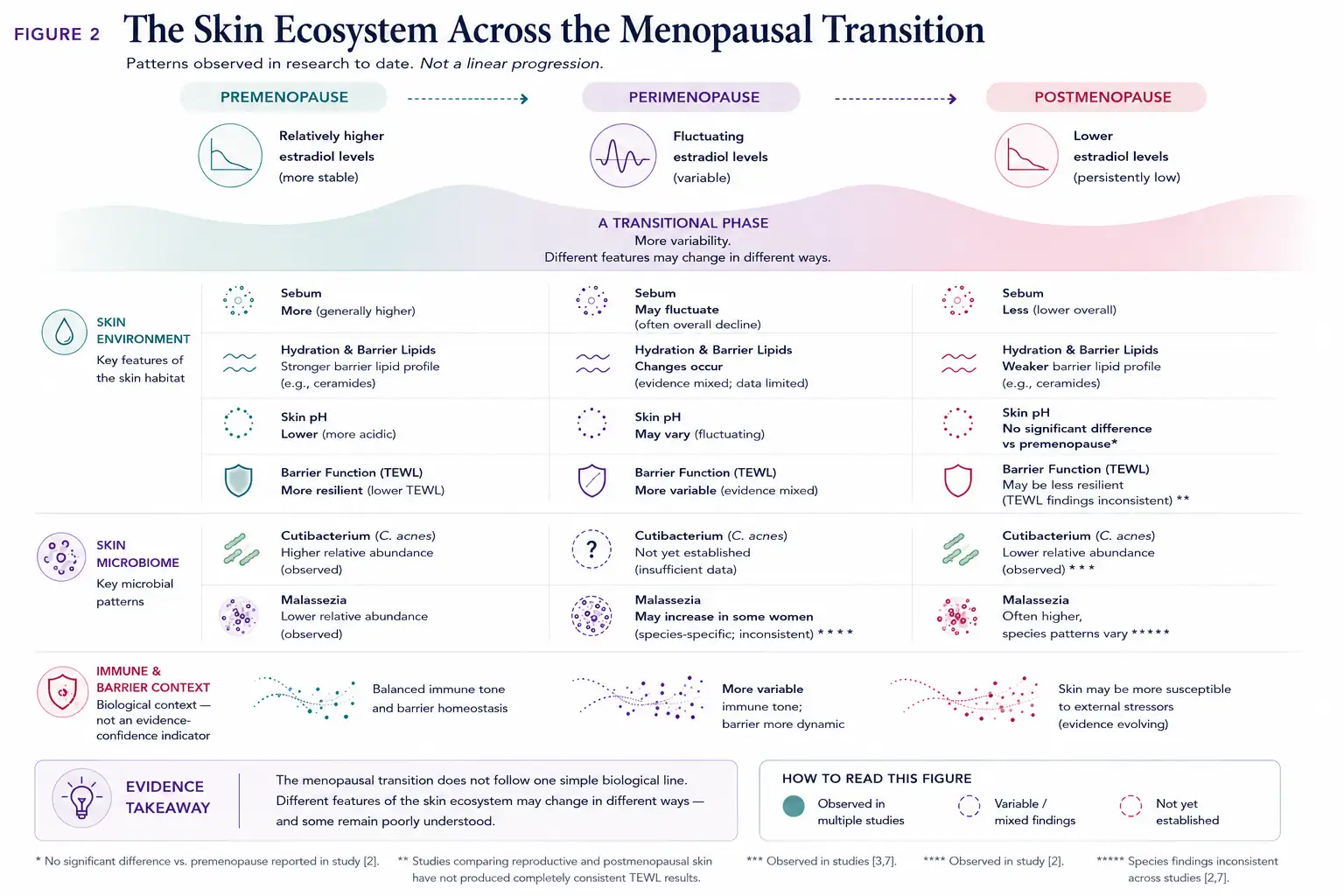
BeMediq infographic comparing the skin environment and microbiome across premenopause, perimenopause and postmenopause, including sebum, hydration, barrier lipids, skin pH, Cutibacterium and Malassezia.
Figure 2 The Skin Ecosystem Across the Menopausal Transition Current research suggests that different features of the skin ecosystem may change in different ways across the menopausal transition. While some differences have been observed between pre- and postmenopausal skin, findings for other features remain variable, inconsistent or insufficiently studied — particularly during perimenopause.

What Menopause Microbiome Research Means for Your Skincare

So where does all of this leave us when we stand in front of the bathroom mirror?

The research does not yet tell us how to create an “ideal” skin microbiome during perimenopause or after menopause. Nor does it give us a list of microorganisms we should encourage or eliminate.

But it does point us toward something we already know how to support:

the skin barrier.

Across the studies we have explored, the emerging picture is not of one isolated change. Sebum can differ. Hydration can change. Barrier lipids, including ceramides, can change. pH may shift in more complex ways. And alongside these changes, researchers are beginning to observe differences in bacterial and fungal communities.

We cannot yet say that strengthening the skin barrier will prevent or reverse those microbial changes. The studies do not show that.

But there is a more immediate reason to care for the barrier: it is part of the biology that may itself be changing.

Supporting the Skin Barrier From the Outside

Remember the “mortar” between our skin cells?

Ceramides are naturally part of it.

Ceramide-containing moisturizers — particularly formulations that combine ceramides with other physiological barrier lipids — have been shown to support hydration and barrier function in dry or experimentally barrier-impaired skin.[8][9]

Importantly, these intervention studies were not specific to women undergoing the menopausal transition.

If your skin has become drier, tighter, rougher or more reactive during perimenopause or after menopause, barrier-supportive skincare may therefore be a more evidence-grounded place to begin than trying to “fix” your microbiome.

That might mean using a moisturizer that supports the barrier and provides appropriate lipids. It can also mean paying attention to what you may be taking away.

More cleansing is not necessarily better cleansing. More exfoliation is not necessarily better renewal.

And using antimicrobial ingredients without a reason is not necessarily helpful simply because microorganisms live on our skin.

The same caution applies to some of the conclusions we might be tempted to draw from microbiome research.

Changes in Malassezia alone give us little reason to rethink every oil we put on our skin. Breakouts can still occur even when the relative abundance of Cutibacterium is lower. And although pH matters to both barrier biology and the microbial environment, healthy skin cannot be reduced to a quest for the lowest possible pH.

The emerging science also gives us little basis for choosing products simply because they are marketed as “microbiome balancing.”

What About HRT?

There is another part of this story that skincare cannot address directly: the hormonal environment itself.

Earlier, we saw that postmenopausal women taking HRT did not show the same ceramide differences observed in women who were not using hormone therapy, and that higher circulating estradiol was associated with greater ceramide abundance and longer ceramides.[1]

This brings us back to where our story began.

The skin barrier is shaped not only by what reaches it from the outside. Its biology is also influenced from within.

That makes the HRT finding scientifically important — but it should not be interpreted as a reason to start hormone therapy for the skin. HRT is a medical treatment whose potential benefits and risks need to be considered individually.

What the study adds to our understanding is something more fundamental: some of the skin changes we experience across the menopausal transition may reflect changes in the hormonal environment itself.

And that is why skincare can support changing skin — but cannot necessarily recreate the biological conditions that existed before those hormonal changes.

What the emerging science gives us, then, is a different way to think about skincare in midlife.

Pay attention to what your skin is doing now.

A cleanser that felt comfortable for years may begin to feel stripping. A moisturizer that once seemed too rich may suddenly feel right. A breakout that looks familiar may have a different biological context. Dryness or reactivity may be telling us that the barrier needs more support rather than more active treatment.

The point is not to chase every microbial change researchers discover.

It is to recognize that when the biology of the skin changes, the skincare that supports it may need to change too.

What We Still Don’t Know About Menopause and the Skin Microbiome

The science is young.

Most of the evidence is cross-sectional: researchers compare different women at different hormonal stages. We still need longitudinal studies following the same women through perimenopause and into postmenopause, while repeatedly measuring hormones, skin physiology and microbial communities.

Only then can researchers begin to separate correlation from cause.

We also need to understand whether microbial changes contribute to particular skin symptoms, how consistently these patterns occur across different populations, skin sites and environments, and whether interventions that support the skin barrier or alter the skin environment can meaningfully influence microbial function.

But the emerging research already gives us a more useful way to think about skin changes during the menopausal transition.

Instead of simply asking:

“Why has my skin changed?”

we can begin to ask more specific questions:

“Which biological mechanisms have changed — and how might they be affecting my skin barrier and microbiome?”

And perhaps most importantly:

“What can I do to support my skin barrier under these new conditions?”

We cannot yet control or engineer the skin microbiome with precision. But we can pay attention to the biology that creates the environment in which it lives.

That means recognizing that changes in sebum, hydration, pH and barrier lipids are not isolated findings. They are interconnected parts of a living system — one shaped in part by our hormonal environment and involving our skin cells, immune responses, bacteria and fungi.

Understanding those connections does not give us control over every change.

But it can help us care for our skin according to the biology it has now — rather than the biology we assume it still has.

Frequently Asked Questions

Menopause and the Skin Microbiome: Common Questions

The research is still emerging. These answers reflect what current studies can — and cannot yet — tell us.

Does menopause change the skin microbiome?

Emerging research suggests that the skin microbiome differs across the menopausal transition. Studies have reported changes in the relative abundance of certain bacteria and fungi, including Cutibacterium and some Malassezia species.

However, most current studies are cross-sectional, so they cannot yet prove that hormonal changes directly cause these microbial shifts.

Does lower Cutibacterium mean fewer breakouts after menopause?

Not necessarily. Cutibacterium acnes is a normal resident of healthy skin, and acne depends on much more than the amount of one bacterium.

Sebum production, follicular biology, inflammation, microbial strains and interactions with other microorganisms can all contribute. This means breakouts can still occur even when overall Cutibacterium abundance is lower.

Does Malassezia increase after menopause?

Current evidence does not support one simple answer. Some studies have found differences in particular Malassezia species across pre-, peri- and postmenopausal groups, while others have found similar levels of certain species before and after menopause.

The more important question may be how different fungal species behave within the changing skin environment rather than whether total Malassezia simply rises or falls.

Can skincare change the skin microbiome after menopause?

Skincare can change aspects of the environment in which the microbiome lives — including hydration, occlusion and skin pH. Some studies have observed microbial changes after skincare interventions, but the effects are not yet predictable enough to define an “ideal” microbiome or a universal microbiome-targeting routine.

For now, supporting a changing skin barrier is better established than trying to engineer specific microbial populations.

Can HRT change the skin microbiome?

We do not yet have strong evidence showing that hormone replacement therapy directly changes the skin microbiome.

Research does suggest that estradiol can influence skin biology, including ceramide metabolism and barrier lipids. Because these features help shape the microbial habitat, HRT could theoretically influence the environment in which microorganisms live — but that causal pathway has not yet been established.

Explore Next · Scientific Spotlights

Continue Exploring the Biology of Midlife Skin

01 Scientific Spotlight

Does HRT Change the Skin Barrier?

What research suggests about estrogen, ceramides and the lipid architecture of postmenopausal skin — and whether hormone therapy can help preserve barrier function.

02 Scientific Spotlight

Skin pH After 40: Can We Change Our Skin’s Acid Mantle?

What determines the skin’s pH, how hormonal transition may influence it — and whether skincare and everyday habits can shift the chemical environment in which our skin microbiome lives.

Scientific Sources

References

  1. Kendall AC, Pilkington SM, Wray JR, et al. Menopause induces changes to the stratum corneum ceramide profile, which are prevented by hormone replacement therapy. Scientific Reports. 2022;12:21715. doi:10.1038/s41598-022-26095-0
  2. Davient B, Rikhraj JK, Ravikrishnan A, et al. Malassezia and the Asian menopausal skin. npj Biofilms and Microbiomes. Published August 6, 2026. doi:10.1038/s41522-026-01119-z
  3. Pagac MP, Stalder M, Campiche R. Menopause and facial skin microbiomes: a pilot study revealing novel insights into their relationship. Frontiers in Aging. 2024;5:1353082. doi:10.3389/fragi.2024.1353082
  4. Cvjetković Nikoletić Đ, Ivanov D, Levakov O, et al. Menopause, Menstrual Cycle, and Skin Barrier Function. Skin Research and Technology. 2025;31(7). doi:10.1111/srt.70203
  5. Ianiri G, LeibundGut-Landmann S, Dawson TL Jr. Malassezia: A Commensal, Pathogen, and Mutualist of Human and Animal Skin. Annual Review of Microbiology. 2022;76:757–782. doi:10.1146/annurev-micro-040820-010114
  6. Vlachos C, Henning MAS, Gaitanis G, Faergemann J, Saunte DML. Critical synthesis of available data in Malassezia folliculitis and a systematic review of treatments. Journal of the European Academy of Dermatology and Venereology. 2020;34(8):1672–1683. doi:10.1111/jdv.16253
  7. Pagac MP, Davient B, Plado LA, et al. Life stage impact on the human skin ecosystem: lipids and the microbial community. npj Biofilms and Microbiomes. 2025;11:13. doi:10.1038/s41522-025-00652-7
  8. Lueangarun S, Tragulplaingam P, Sugkraroek S, Tempark T. The 24-hr, 28-day, and 7-day post-moisturizing efficacy of ceramides 1, 3, 6-II containing moisturizing cream compared with hydrophilic cream on skin dryness and barrier disruption in senile xerosis treatment. Dermatologic Therapy. 2019;32(6). doi:10.1111/dth.13090
  9. De Paepe K, Roseeuw D, Rogiers V. Repair of acetone- and sodium lauryl sulphate-damaged human skin barrier function using topically applied emulsions containing barrier lipids. Journal of the European Academy of Dermatology and Venereology. 2002;16(6):587–594. doi:10.1046/j.1468-3083.2002.00527.x
  10. Byrd AL, Belkaid Y, Segre JA. The human skin microbiome. Nature Reviews Microbiology. 2018;16:143–155. doi:10.1038/nrmicro.2017.157
  11. Chang CH, Chovatiya R. More yeast, more problems?: reevaluating the role of Malassezia in seborrheic dermatitis. Archives of Dermatological Research. 2024;316(4):100. doi:10.1007/s00403-024-02830-7
  12. Janssens-Böcker C, Doberenz C, Monteiro M, de Oliveira Ferreira M. Influence of Cosmetic Skincare Products with pH <5 on the Skin Microbiome: A Randomized Clinical Evaluation. Dermatology and Therapy. 2025;15:141–159. doi:10.1007/s13555-024-01321-x

Medical & Editorial Disclaimer

Content published by BeMediq Journal is provided for educational and informational purposes only. It may discuss scientific research, health, wellness, aging, beauty, lifestyle, and related topics, but is not intended to provide medical advice, diagnosis, or treatment, or to replace consultation with a qualified healthcare professional.

Scientific evidence evolves, and research findings may be preliminary, observational, conflicting, or subject to different interpretations. References to studies, biological mechanisms, associations, or potential benefits should not be understood as establishing that the same findings apply to every individual or as demonstrating clinical effectiveness unless specifically supported by the evidence discussed.

Editorial analysis, interpretations, perspectives, and opinions presented by BeMediq Journal are intended to provide context and encourage informed discussion. Where scientific evidence and editorial interpretation intersect, we aim to distinguish established findings from emerging evidence, hypotheses, and our editorial perspective.

Decisions concerning your health, medications, treatments, supplements, or other medical care should be made in consultation with an appropriately qualified healthcare professional.

Written by Elena Brull, Women’s Health Journalist & Functional Nutrition Research Writer (ORCID: 0009-0009-3547-6731)

About the Author

Elena Brull is a Women’s Health Journalist and Functional Nutrition Research Writer covering women’s health, nutrition, metabolic health, hormonal transitions, and longevity. Her work examines scientific research, emerging evidence, and the connections between them to help women better understand their biology and the questions worth asking about it. She writes from a non-clinical, educational perspective — with the intention to inform and empower, not to diagnose or prescribe.

Our Editorial Standards

EDITORIAL DISCLOSURE

BeMediq Care offers products or services related to the topic discussed in this article. BeMediq Journal evaluates the scientific evidence independently of products and services offered through BeMediq Care. Research discussed here should not be interpreted as evidence that a specific BeMediq product or service produces the same effects unless explicitly stated and supported by evidence specific to that product or service.

────────────

FROM BEMEDIQ CARE · COMMERCIAL

Explore BeMediq Care

BeMediq Care offers access to health and wellness services separate from the editorial content of BeMediq Journal.

Discover Products to Support Your Health & Well-Being

Science Spotlight

Curious About the Science behind this Article?

BeMediq Science Spotlight icon

Similar articles for You