THE UNIVERSE WITHIN US - Skin Biology Beneath the Surface
How hormones, metabolism, nutrients, immunity, circulation and cellular biology become part of the skin story.
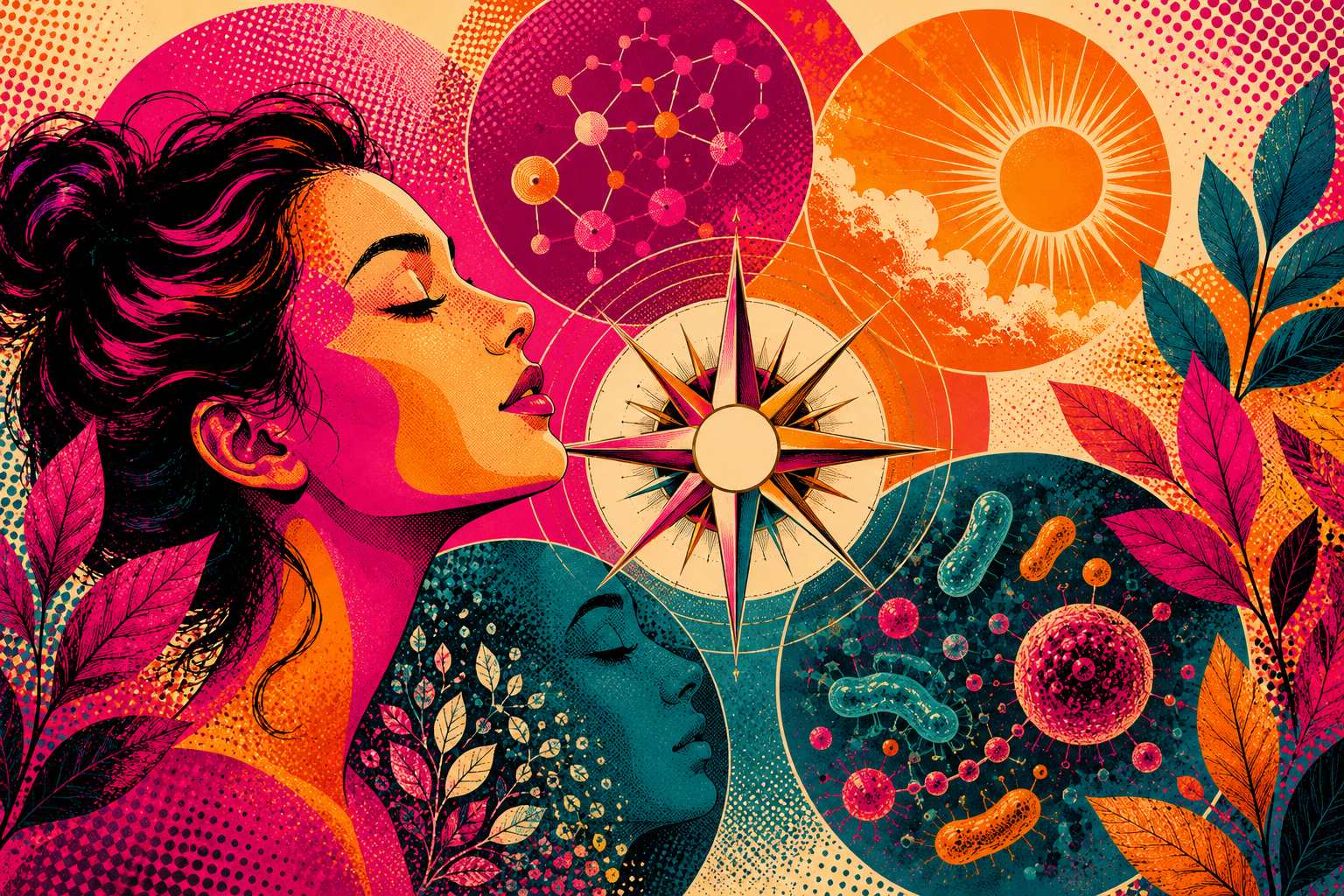
Skin may be what we see, but it does not exist apart from the body beneath it.
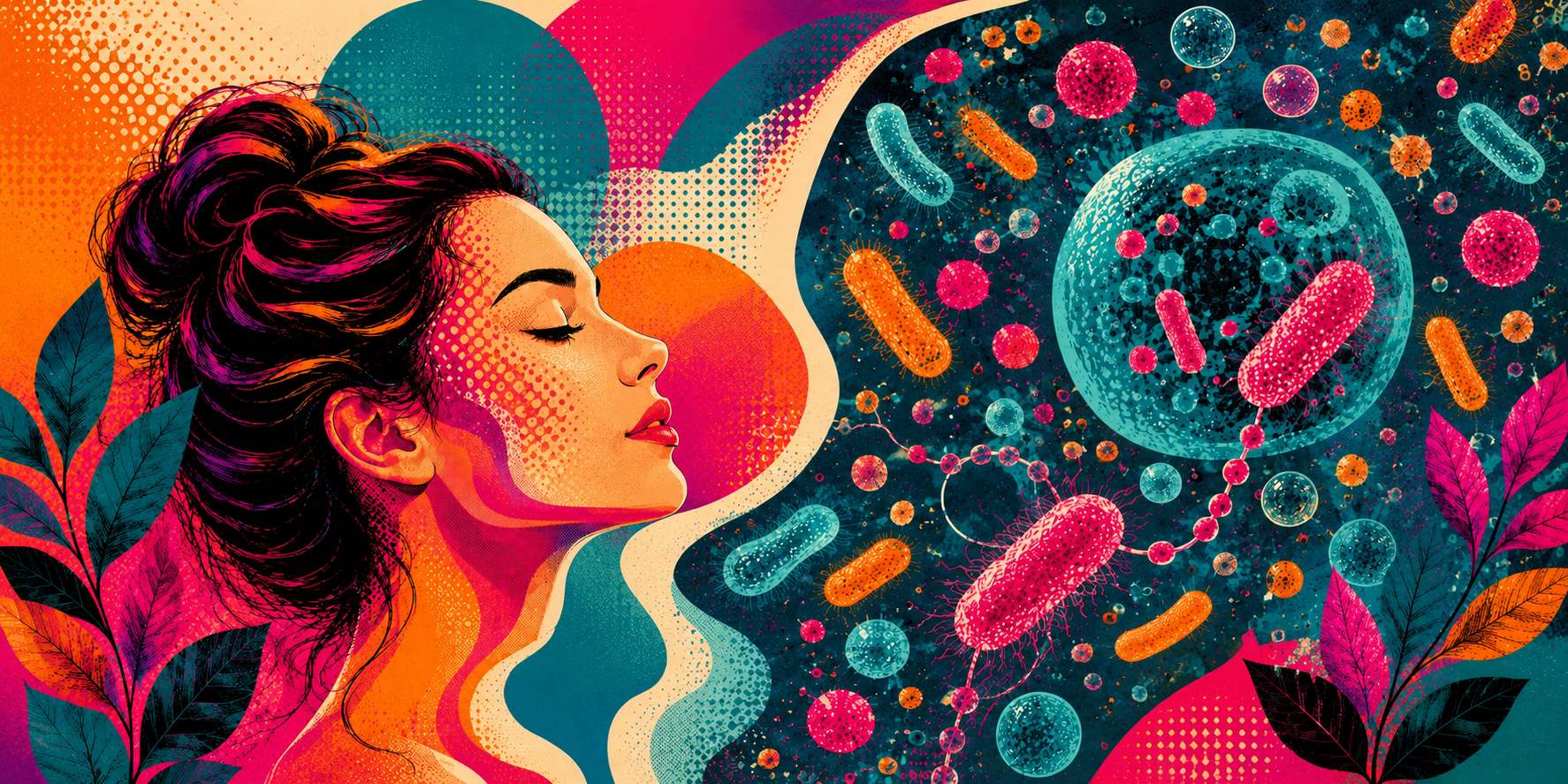
Hormones communicate with skin cells. Nutrients provide materials they need to function. Blood vessels deliver oxygen and nutrients. Immune pathways help coordinate defense and repair. And inside individual cells, metabolism, mitochondria and other molecular processes influence how skin maintains and renews itself. [1–6]
More than two decades ago, researchers were already describing human skin as both a target for hormones and a tissue capable of producing and metabolizing hormonal signals itself. Since then, the picture has expanded further. Modern skin research increasingly connects endocrine signaling with immunity, nutrient sensing, mitochondrial function, cellular senescence and communication between cells. [1–5]
What appears on the surface is therefore connected to an intricate network of biological activity beneath it.
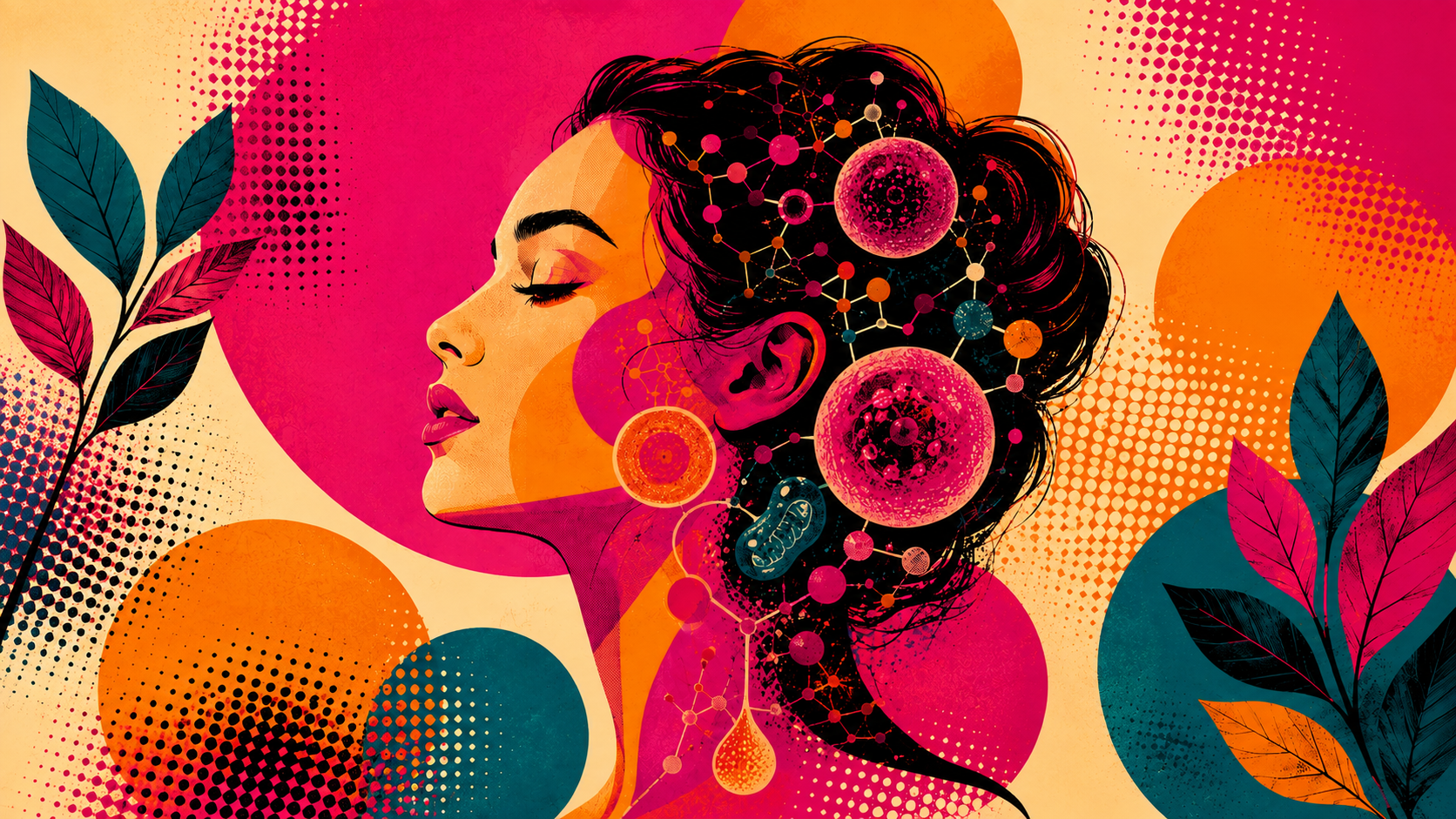
This is the universe within us.
What Science Has Learned
From an Isolated Surface to an Interconnected Biology
Over the past several decades, research has progressively revealed how skin interacts with endocrine signaling, metabolism, immunity and the cellular biology of aging. [1–5]
What we see on the surface can therefore be the visible outcome of many processes interacting beneath it.
Explore What Science Has Learned
01
Skin Became Part of a Larger Biological Network
One of the important shifts in skin science has been conceptual.
Skin is not merely a passive boundary separating the body from the outside world. It contains receptors for numerous hormones, can metabolize hormonal signals and can itself produce biologically active molecules. [1–3]
Research describing human skin as a peripheral endocrine organ appeared more than two decades ago. Subsequent work has continued to develop this concept, examining signaling involving sex hormones, growth hormone and IGF-1, glucocorticoids, thyroid-related pathways, retinoids, vitamin D, melatonin and other endocrine mediators. [1–3]
What is happening to the skin?
became a broader question:
What biological signals is the skin receiving, producing and responding to?
02
Hormones Became Part of the Skin Story
Hormonal influence on skin is now well established, although different hormones act through different pathways and the strength of evidence varies by outcome. [1–3]
Estrogens are among the most extensively studied hormonal influences on skin aging. But contemporary endocrine research extends beyond estrogen alone and includes IGF-1, growth hormone, retinoid signaling, melatonin and components of other neuroendocrine pathways. [1–3, 8]
This matters particularly across life transitions.
Puberty, pregnancy and menopause are not simply chronological milestones. They involve changes in endocrine signaling that can coincide with changes in sebum production, pigmentation, collagen, hydration, hair and other aspects of skin biology. [1–3, 8]
It is one reason age alone is often an incomplete explanation for why skin changes.
A systematic review and meta-analysis of 15 studies involving 1,589 women, for example, found differences associated with menopausal hormone therapy in skin elasticity, thickness and collagen content, while the pooled result for skin dryness was not statistically significant. The authors also emphasized the need for better clinical trials. [8]
03
Metabolism Entered the Conversation
Another shift came from aging biology itself.
Modern research on skin aging increasingly includes deregulated nutrient sensing and mitochondrial dysfunction alongside genomic instability, epigenetic alterations, loss of proteostasis, cellular senescence, stem-cell changes and altered communication between cells. [4]
A visible skin change, however, cannot tell us on its own whether metabolism is involved.
Skin cells, like other cells in the body, require energy, regulate nutrients, respond to molecular signals and undergo changes in those processes over time.
The boundary between skin biology and whole-body biology is therefore much less absolute than it may appear from the surface.
04
Nutrition Became More Nuanced
The connection between nutrition and skin sounds intuitive, but the science requires some restraint.
Skin requires adequate nutrients for normal structure and function, and nutritional deficiency can impair skin integrity. Research has examined vitamins, minerals, fatty acids and other dietary components in relation to barrier function, immune responses, photoprotection and aging. [6–7]
Adequacy matters; excess is a different question. More of a nutrient does not necessarily translate into better skin.
Clinical evidence for dietary supplements marketed for youthful skin remains uneven, and reviews have specifically noted that consumer enthusiasm often exceeds the strength and consistency of the evidence. [7]
So the more scientifically useful question is not:
Which supplement makes skin younger?
but:
Which nutrients are necessary for normal skin biology, when does nutritional status become relevant, and where has an intervention actually been tested in humans?
That distinction can guide much of our future coverage.
05
Immunity Is Not Separate From Skin
Skin is also an immune organ. [5]
Its immune cells and signaling molecules help distinguish threats, coordinate inflammatory responses and participate in repair. These pathways do not operate independently of hormones, metabolism or cellular aging. [5]
This interconnectedness has become particularly important in modern research on aging skin. Recent research describes changes in immune function, chronic low-grade inflammatory signaling and cellular communication as part of the changing biological environment of aging skin rather than as isolated phenomena. [4–5]
Again, the important idea is interaction rather than diagnosis.
The immune contribution cannot be read directly from a cosmetic skin change. But immune biology is part of the environment in which skin functions.
06
Aging Moved Inside the Cell
Perhaps one of the biggest changes in aging research has been the scale at which scientists can investigate it.
Skin aging can now be studied not only through wrinkles, pigmentation or collagen loss, but through changes occurring within cells and their surrounding environment.
Research includes mitochondrial dysfunction, oxidative stress, DNA damage, epigenetic change, cellular senescence, altered nutrient sensing, stem-cell dysfunction and changes in intercellular communication. [4, 9]
Cellular senescence has become a particularly active field. Senescent cells stop dividing but can remain metabolically active and influence surrounding tissue through altered signaling. Researchers are investigating how the accumulation and behavior of senescent cells may contribute to physiological skin aging and age-associated changes. [9]
But here, too, mechanism is not the same as treatment.
Understanding a pathway does not automatically prove that targeting it with a supplement, cosmetic ingredient or intervention will meaningfully alter human skin aging.
That distinction will remain central throughout BeMediq Journal.
What We Know — And What We Don't
The last several decades have given us a much richer picture of skin biology.
We know that skin responds to hormones. We know that adequate nutrition matters to normal skin function. We know that immune signaling, metabolism, mitochondria and cellular aging processes participate in how skin functions and changes over time. [1–7, 9]
What science cannot yet provide is a simple formula connecting every visible change to one internal cause.
Dryness alone cannot establish a hormonal deficiency. A breakout cannot tell us whether metabolism is involved. Pigmentation may arise through more than one biological pathway. And even a well-characterized molecular mechanism may not translate into an effective intervention in people.
The universe within us gives us questions to investigate — not diagnoses to assume.
In-depth articles and Science Spotlights that dive deeper into the evidence.
Articles will appear here as they are published.
Coming Soon
Estrogen and Skin: What Changes When Estrogen Declines?
How declining estrogen levels affect collagen, hydration, elasticity and barrier function.
♡
Coming Soon
When Do Menopausal Skin Changes Actually Begin?
The perimenopause transition and the earliest measurable shifts in skin.
♡
Coming Soon
Skin Is a Hormonal Organ
How skin both responds to and produces hormones.
♡
More articles coming soon
References
1. Zouboulis CC. Human skin: an independent peripheral endocrine organ. Horm Res. 2000;54(5–6):230–242. doi:10.1159/000053265. https://pubmed.ncbi.nlm.nih.gov/11595811/
2. Zouboulis CC. The skin as an endocrine organ. Dermatoendocrinol. 2009;1(5):250–252. doi:10.4161/derm.1.5.9499. https://pubmed.ncbi.nlm.nih.gov/20808511/
3. Slominski A, Wortsman J, Paus R, Elias PM, Tobin DJ, Feingold KR. Skin as an endocrine organ: implications for its function. Drug Discov Today Dis Mech. 2008;5(2):e137–e144. doi:10.1016/j.ddmec.2008.04.004. https://pubmed.ncbi.nlm.nih.gov/19492070/
4. Jin S, Li K, Zong X, Eun S, Morimoto N, Guo S. Hallmarks of Skin Aging: Update. Aging Dis. 2023;14(6):2167–2176. doi:10.14336/AD.2023.0321. https://pubmed.ncbi.nlm.nih.gov/37199583/
6. Park K. Role of micronutrients in skin health and function. Biomol Ther (Seoul). 2015;23(3):207–217. doi:10.4062/biomolther.2015.003. https://pubmed.ncbi.nlm.nih.gov/25995818/
7. Muzumdar S, Ferenczi K. Nutrition and youthful skin. Clin Dermatol. 2021;39(5):796–808. doi:10.1016/j.clindermatol.2021.05.007. https://pubmed.ncbi.nlm.nih.gov/34785007/
8. Pivazyan L, Avetisyan J, Loshkareva M, Abdurakhmanova A. Skin Rejuvenation in Women using Menopausal Hormone Therapy: A Systematic Review and Meta-Analysis. J Menopausal Med. 2023;29(3):97–111. doi:10.6118/jmm.22042. https://pubmed.ncbi.nlm.nih.gov/38230593/
9. Ho CY, Dreesen O. Faces of cellular senescence in skin aging. Mech Ageing Dev. 2021;198:111525. doi:10.1016/j.mad.2021.111525. https://pubmed.ncbi.nlm.nih.gov/34166688/
Medical & Editorial Disclaimer
Content published by BeMediq Journal is provided for educational and informational purposes only. It may discuss scientific research, health, wellness, aging, beauty, lifestyle, and related topics, but is not intended to provide medical advice, diagnosis, or treatment, or to replace consultation with a qualified healthcare professional.
Scientific evidence evolves, and research findings may be preliminary, observational, conflicting, or subject to different interpretations. References to studies, biological mechanisms, associations, or potential benefits should not be understood as establishing that the same findings apply to every individual or as demonstrating clinical effectiveness unless specifically supported by the evidence discussed.
Editorial analysis, interpretations, perspectives, and opinions presented by BeMediq Journal are intended to provide context and encourage informed discussion. Where scientific evidence and editorial interpretation intersect, we aim to distinguish established findings from emerging evidence, hypotheses, and our editorial perspective.
Decisions concerning your health, medications, treatments, supplements, or other medical care should be made in consultation with an appropriately qualified healthcare professional.
Elena Brull is a Women’s Health Journalist and Functional Nutrition Research Writer covering women’s health, nutrition, metabolic health, hormonal transitions, and longevity. Her work examines scientific research, emerging evidence, and the connections between them to help women better understand their biology and the questions worth asking about it. She writes from a non-clinical, educational perspective — with the intention to inform and empower, not to diagnose or prescribe.
Our Editorial Standards
EDITORIAL DISCLOSURE
BeMediq Care offers products or services related to the topic discussed in this article. BeMediq Journal evaluates the scientific evidence independently of products and services offered through BeMediq Care. Research discussed here should not be interpreted as evidence that a specific BeMediq product or service produces the same effects unless explicitly stated and supported by evidence specific to that product or service.
────────────
FROM BEMEDIQ CARE · COMMERCIAL
Explore BeMediq Care
BeMediq Care offers access to health and wellness services separate from the editorial content of BeMediq Journal.
Discover Products to Support Your Health & Well-Being